Do Weak Electromagnetic Fields Help Plants Grow?
New research explores how 7.83 Hz and 528 Hz frequencies influence turnip greens
By Igor Nelson, VortexLab (Coimbra, Portugal)
Published: November 2025
For decades, scientists have studied how electromagnetic fields—natural or human-made—interact with living systems. Yet despite thousands of experiments, the biological influence of weak, extremely low-frequency (ELF) electromagnetic fields remains mysterious.
A new study from VortexLab, an independent research lab in Portugal, adds a fresh piece to the puzzle. The research, led by Igor Nelson, examined how two specific ELF frequencies—7.83 Hz and 528 Hz—affect the early growth of turnip greens (Brassica rapa var. rapa).
⚡ Why 7.83 Hz and 528 Hz?
The first frequency, 7.83 Hz, is famous as the Schumann resonance—a natural electromagnetic tone produced by lightning discharges in Earth’s ionosphere. This frequency has long intrigued biologists because it mirrors the brain’s alpha rhythm and is thought to subtly influence circadian and neurological patterns.
The second, 528 Hz, is better known from the world of sound therapy. Sometimes called the “love frequency” or “healing tone,” it has been associated in pop culture with stress reduction and DNA repair. But there’s little hard data on its electromagnetic, as opposed to acoustic, effects.
Nelson’s experiment sought to test whether exposure to weak electromagnetic oscillations at these frequencies could alter plant development.
🌾 How the experiment worked
Turnip green seeds were germinated under identical environmental conditions and divided into three groups:
- Control group – no field exposure
- 7.83 Hz group – exposed for one hour daily to a 1 mT magnetic field at 7.83 Hz
- 528 Hz group – exposed for one hour daily to a 1 mT magnetic field at 528 Hz
All exposures lasted five consecutive days. The fields were produced using solenoidal copper coils driven by low-voltage amplifiers. Care was taken to control for temperature, light, and position so that the only variable was frequency exposure.
🌿 What the plants revealed
The germination rate—the number of seeds that sprouted—was statistically the same in all groups.
However, the seedlings that experienced the electromagnetic fields grew taller.
- 7.83 Hz exposure: average shoot length = 2.40 cm
- 528 Hz exposure: average shoot length = 2.49 cm
- Control group: average shoot length = 1.80 cm
Both exposed groups showed significantly greater shoot elongation (p < 0.05) than the control. This suggests that ELF electromagnetic fields can stimulate early vegetative growth—even though they don’t change germination success.
🔬 What might explain this?
The fields used were too weak to cause heating, ruling out simple thermal effects. Instead, Nelson proposes that non-thermal interactions might be involved—perhaps through modulation of ion transport, membrane polarization, or calcium signaling in plant cells.
Similar effects have been noted in other studies at ELF frequencies, but the mechanisms remain speculative. “It’s likely that very weak fields interact with natural bioelectric processes,” Nelson explains. “Plants are electrochemical organisms; they might be more sensitive than we think.”
🌻 What’s next?
The research highlights a subtle but measurable biological effect of ELF fields. However, it’s a pilot study—limited to one species and short exposure times.
Future work planned at VortexLab includes:
- Testing multiple plant species
- Mapping electromagnetic fields in real time
- Measuring chlorophyll content, root growth, and gene-expression changes
- Exploring whether early-stage stimulation leads to higher yields later
Nelson notes that understanding these interactions could help “bridge plant physiology, bioelectromagnetics, and environmental science.”
💡 Why it matters
If confirmed, these findings could reshape how we think about subtle environmental energies. Weak electromagnetic fields are everywhere—both natural and technological. Knowing how they interact with living systems could have implications for agriculture, ecology, and even human health.
As Nelson puts it:
“We live in a planet-sized electromagnetic resonator. Life has evolved in its rhythms for millions of years. Our job as researchers is to understand how these natural frequencies might quietly influence the growth of life itself.”
📘 Reference
Nelson, I. (2025). Effects of 7.83 Hz and 528 Hz Extremely Low-Frequency Electromagnetic Fields on Early Growth of Turnip Greens (Brassica rapa var. rapa).

[SBYeast] Subtle Bioenergy on Yeast Growth and Viability
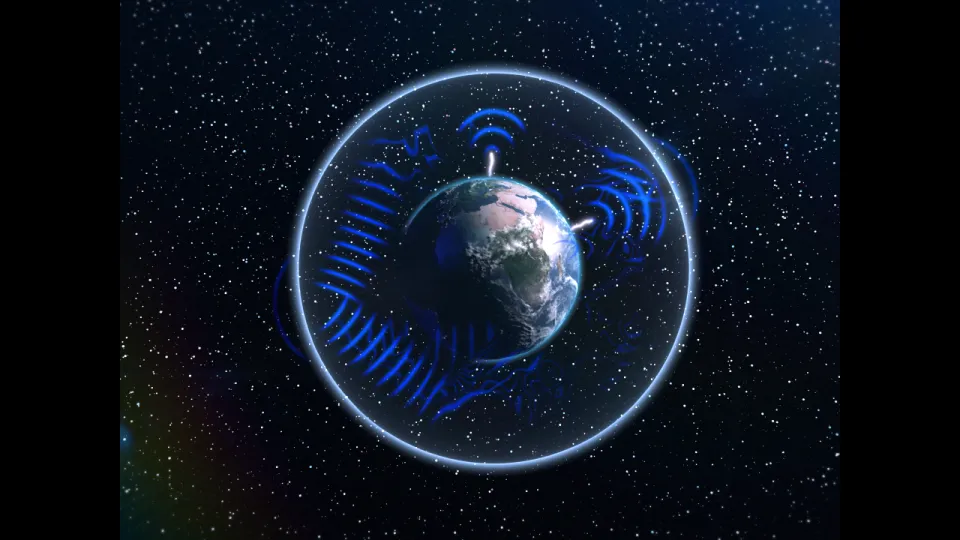
Exploring the influence of Schumann resonance and electromagnetic fields on bioelectricity and human health
How to Properly Calibrate Your Arduino pH Sensor
About The Author
